16 Days of Activism 2025: How Rural Girls in Balochistan Rose Against Gender-Based Violence
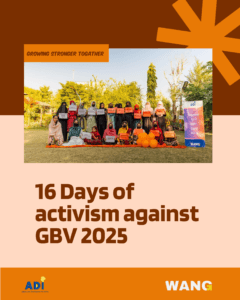
In rural Balochistan, where gender-based violence remains one of the most deeply rooted challenges, 2025’s 16 Days of Activism campaign marked a transformative chapter. As part of this global movement, the Welfare Association for New Generation (WANG), through its Adolescent Development Initiative (ADI), mobilized students, teachers, and community members to confront the cultural, social, and digital systems that enable violence against women and girls.
This year’s campaign, under the United Nations global theme “UNiTE to End Digital Violence Against All Women and Girls,” highlighted the rising threat of online harassment and technology-facilitated abuse. In communities where access to the internet is growing rapidly, girls are increasingly vulnerable to stalking, impersonation, and online exploitation. The campaign created a timely opportunity to start these urgent conversations, especially among youth who use digital platforms daily but often without the tools to navigate them safely.
Led by Hafsa and the ADI team, a powerful community session was organized that brought together students from colleges, the WANG Lab of Innovation (WALI), and surrounding areas. Through interactive activities and structured dialogues, participants explored real-life questions: What does violence mean in our local context? How do culture, patriarchy, and silence allow it to continue? And how can young people lead change not just in words, but in practice?
The discussions were not confined to theory. Participants shared lived experiences. Girls spoke about facing verbal abuse online. Boys reflected on peer pressure and the normalization of control. Teachers added insight into how silence in the classroom can often mirror the silence at home. These conversations grounded, emotional, and real broke through generational and gender barriers, inviting everyone into a collective reflection.
A short video of the session shared by WANG and Adi on Facebook through official page Welfare Association for New Generation – WANG shows the powerful engagement of the community. It captures a new generation of changemakers many speaking up for the first time. It’s not just a campaign highlight it’s a window into the future of inclusive leadership in Pakistan’s underserved regions.
This local event was part of a larger effort. Over the 16-day period, more than 7,500 people across Balochistan engaged with ADI’s sessions: 1,500 students, 1,000 community members, 70 teachers, and 5,000 digital participants. Activities ranged from documentary screenings, digital safety workshops, baithaks, and storytelling sessions focused on bodily autonomy, consent, and social responsibility.
Unlike many top-down interventions, this campaign was community-led. ADI’s peer educators adolescent girls trained to lead in their communities facilitated sessions using local languages and lived experiences. Their leadership made learning relatable and real. The use of familiar words, community stories, and safe spaces allowed deeper conversations that otherwise never surface in public.
Through “baithaks,” older women shared how societal silence enabled their own suffering. Mothers pledged to protect their daughters differently. Grandmothers, once silenced, stood in solidarity with their granddaughters. This cross-generational healing built collective strength strength rooted in shared pain and now shared purpose.
The campaign also included young men and boys. They explored what it means to reject harmful ideas of masculinity and take responsibility for creating safer environments. These sessions opened critical space for self-reflection showing that gender justice isn’t just a women’s issue, but a collective human rights responsibility.
One of the most pressing issues raised was the rise in digital violence. As mobile phones and social media become more widespread, so do new forms of harassment. Girls described having their photos misused, being added to anonymous groups, or receiving threatening messages from fake accounts. Many stopped using platforms altogether due to fear. In response, ADI conducted digital safety sessions teaching girls how to manage privacy settings, report abuse, and talk to adults when something feels wrong.
What made this campaign unique was its long-term vision. It was not about 16 days it was about sustainable change. ADI worked with schools to include gender awareness in curricula. Communities were trained to identify early signs of abuse. Youth were given the tools to protect, respond, and lead. These weren’t one-time workshops they were seeds for lasting transformation.
As 15-year-old Gul Bano from Turbat said, “Before this, we thought violence was normal. Now we know it’s not. We have the right to be safe online and offline.”
Balochistan’s 2025 16 Days campaign showed that even in the most remote areas, when young people are given space to speak, they don’t just talk they lead. Through trust, education, and community support, violence can be challenged at its roots.
The event reaffirmed WANG’s commitment to gender justice, adolescent empowerment, and digital inclusion. ADI continues to create safe spaces where young people don’t just learn they lead. And through initiatives like this, change becomes more than possible it becomes inevitable.
For a detailed breakdown of the campaign activities, impact numbers, and voices from the field, read the complete report by WANG and ADI. The report includes session summaries, youth testimonials, photos, and key recommendations for preventing gender-based and digital violence in rural communities.
Read Full Report