
The Paradox of Modern Connectivity
When policymakers in the global north discuss the "digital divide," they often mean the difference between fiber optic gigabit connections and basic broadband. In rural Balochistan, however, the digital divide is much more profound: it is the difference between a 3G signal that occasionally reaches a single hilltop, and complete, total digital darkness in the valleys below.
How do you teach digital literacy, software logic, and computational thinking to students who have never consistently accessed the internet? This is the central challenge that the Welfare Association for New Generation (WANG) was forced to solve early in its mandate. For millions of Pakistanis living outside urban tech hubs, the assumption of connectivity is a luxury. If we wait for perfect infrastructure to arrive before we start teaching, an entire generation will be structurally locked out of the future economy.
Offline-First Methodologies
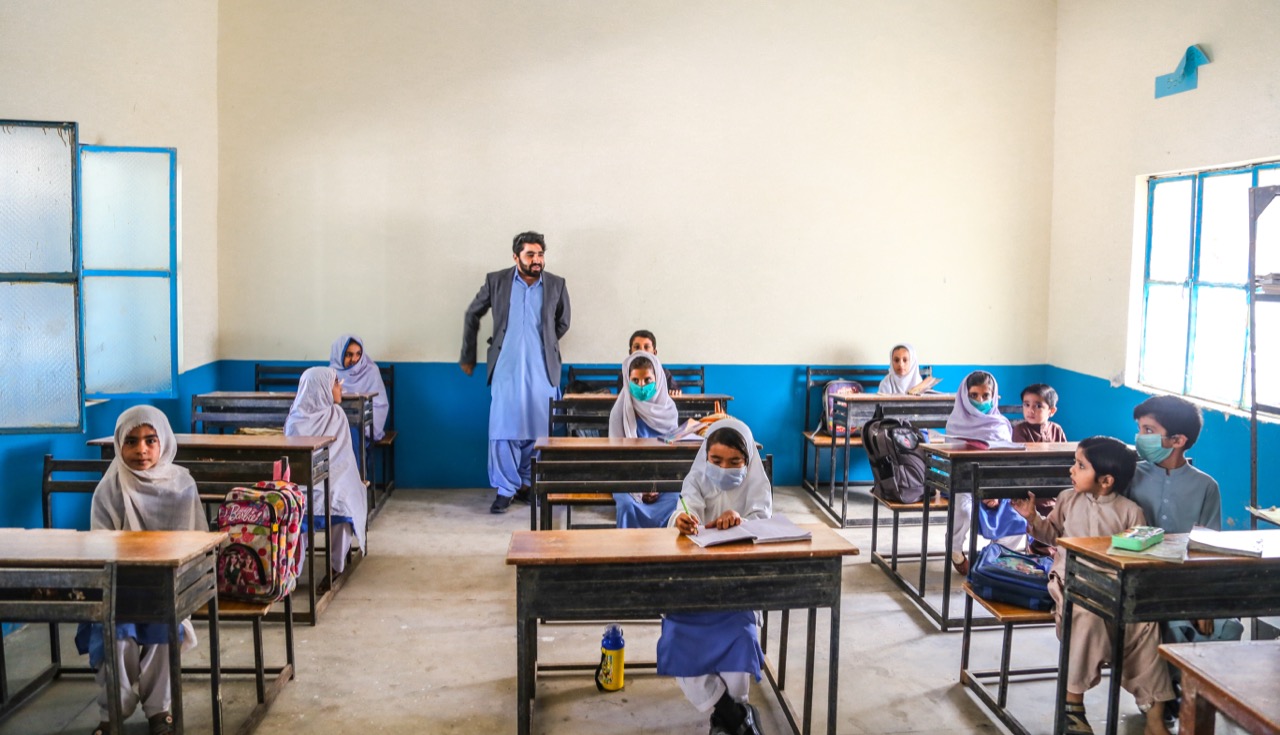
At the WALI innovation lab in Lasbela, the team pioneered an "Offline-First" pedagogy. Instead of relying on cloud-based tutorials and real-time coding environments, WALI staff deploy localized web servers like Raspberry Pis packed with offline copies of wikis, basic coding interpreters, and typing software.
The initial hurdle in a disconnected village isn't learning Python—it's understanding what a file system is, how a mouse translates physical movement to a cursor, and the concept of saving data. WANG's curriculum utilizes offline-accessible logical games that teach the fundamentals of algorithmic thinking without requiring a single byte of outside data. A student can build a rudimentary website using localized open-source tools purely on the local network established in the WALI lab.
PakSpeed: Preparing for the Connection
The offline-first training is not meant to be a permanent substitute for true internet access, but a preparatory phase. By the time infrastructure reaches a rural area, residents should already possess the mechanical and logical skills necessary to harness it.
This approach connects to PakSpeed, WANG’s community-owned connectivity research and speed-test platform for rural growth. When a community finally transitions from offline training to online capability, they don't spend months figuring out how to navigate the web. They immediately begin applying their skills to e-commerce, accessing agricultural data, and remote education.
According to WANG data documented on the Impact page, localized offline tech camps have trained over 1,322 individuals in core digital skills, proving that education does not have to wait for the telecom companies.
Computational Thinking Without Computers
In the most remote areas, WANG staff sometimes face situations where bringing physical computers simply isn't viable due to power constraints or extreme rugged terrain. In these instances, digital literacy is taught through "unplugged" activities. Using physical cards, grid maps, and human-movement algorithms, children learn the fundamentals of sequential logic, branching (if/then statements), and looping.
We discovered that a child who can map out a physical algorithm in the dirt outside a rural schoolhouse adapts to a keyboard incredibly fast when finally given the opportunity. The barrier wasn't an inability to understand technology—it was an assumption that tech education requires a constant WiFi signal.
WANG is proving every day in Lasbela that with creativity, dedication, and the right offline tools, the digital future can be built entirely off the grid.
Urban platforms alone do not close the rural gap
Pakistan has large national skills programs built for learners who can sit at home with steady data, submit assignments online, and read English documentation comfortably. Those models matter—but they silently exclude households where homework happens by lantern, where girls lack safe transport to evening classes, and where “self-paced” really means “no one in the village has ever opened a spreadsheet.” WANG’s contrast case is simple: start in person, in Urdu, with devices you control, then graduate learners toward online tools when the tower finally appears.
That philosophical split—physical hub versus pure LMS—is why we maintain a dedicated digital literacy in Balochistan pillar alongside this story. If your organization funds connectivity, WANG can show you exactly how offline cohorts convert into measurable speed-test literacy and civic participation through PakSpeed; if you fund education ministry reform, we can share facilitator playbooks that do not assume every school has a computer lab yet.
None of this replaces the need for fiber and fair spectrum policy. It simply refuses to let another cohort age out of school while waiting for perfect infrastructure. When you are ready to co-fund a lab cycle, transport-safe hours for girls, or audit-friendly attendance data, write to WANG with your geography and budget line—we answer with a field plan tied to Impact, not generic training brochures. The WALI lab in Lasbela remains the reference site for how offline-first cohorts graduate into national tools without abandoning local language or child safety norms.