
The Generational Gap in Rural Innovation
When introducing new technologies and climate-resilience practices to rural areas, a common friction point emerges: the youth eagerly absorb the new information, but face resistance at home from older generations who hold the household decision-making power. For young women in regions like Lasbela, Balochistan, practicing newly acquired digital skills—like graphic design, e-commerce, or AI prompt engineering—requires familial support. Without buy-in from the matriarchs of the family, these skills often lay dormant.
The Welfare Association for New Generation (WANG) identified this friction early on during its digital literacy camps at the WALI lab. The solution wasn't to push harder against family structures, but to invite those structures into the learning process. This led to the creation of WIRE (Women in Rural Enterprise), a flagship program that utilizes a deliberate "mother-daughter" collaborative model.
The WIRE Model: Intergenerational Teams
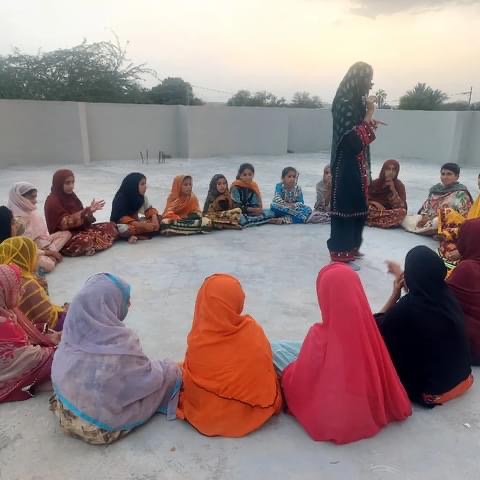
The fundamental design of WIRE is to recruit not just an individual, but a team. By bringing mothers and daughters into the WALI lab together, the program breaks down generational mistrust of technology.
In a typical WIRE cohort, young women—often possessing baseline literacy and an intuitive grasp of smartphones—are paired with their mothers or senior female relatives, who bring deep community trust, financial management intuition, and resilience. Together, they embark on a joint curriculum focusing on digital enterprise. The daughter might learn the mechanical aspects of setting up an online marketplace built through tools like PakSpeed, while the mother advises on product sourcing, pricing elasticity in their local market, and managing proceeds.
Climate Resilience and Economic Independence
WIRE is heavily focused on practical resilience, particularly following the devastating floods that frequently impact Balochistan. The program equips these mother-daughter teams with the tools to build digitally-supported micro-businesses that are insulated from local physical economic disruptions.
A core component of the syllabus involves utilizing Urdu AI to understand agricultural patterns, modern crafting trends, and accessing government relief channels online. By teaching women to harness climate data and diversify their household incomes digitally, WANG is strengthening the entire community's safety net. As noted by the Asian Development Bank's CAREC Gender Climate Awards 2024, honoring WANG's work, empowering women through digital means is a direct lever for broad climate resilience.
Impact: The Ripple Effect in Lasbela
The outcomes of the WIRE initiative are immediately visible within the Ahmed Abad Wang community and surrounding regions. We've seen mother-daughter teams successfully launch online craft businesses, establish digitized community ledgers, and become vocal advocates for digital literacy among other families.
Because the mother is an active participant, the daughter's tech utilization isn't viewed with suspicion; rather, the smartphone or the laptop is recognized as a legitimate tool of family advancement. The mother becomes the advocate within her peer group of older women, drastically reducing the cultural barrier to female digital engagement across the whole village ecosystem.
Explore the wider ecosystem of WANG's women-centric programs in our Initiatives overview, or learn more about the specific metrics generated by these cohorts at our Impact dashboard. For a fuller narrative on the gender digital divide, solar-aware delivery, and CAREC-recognized integration of climate and women's leadership, see the Women & girls in technology pillar page.
Evidence beyond the classroom
Journalists and donors often ask for “proof” that a mother–daughter model is more than a feel-good story. WANG publishes aggregate WIRE outcomes alongside flood recovery, scholarship, and climate-leader totals on Impact, and points to third-party citations on Media. The CAREC Gender Climate Champion 2024 journal entry documents how independent review treated WANG’s rural institution as a serious peer—not a token rural project—in regional gender–climate programming.
That external validation matters because rural women’s programs are easy to romanticize and hard to fund well. WIRE is designed as infrastructure: cohort alumni become the trusted nodes who explain why a smartphone is a ledger, not a scandal, and why an Urdu-language AI primer is a household literacy tool rather than “something only boys study in the city.”
If you compare WIRE only to urban incubators, you will miss the point. The product is not a pitch deck—it is a household agreement to try something new. That is why WANG still publishes hard outcome metrics on Impact and invites partners to contact us with explicit targets (trainees placed, enterprises live, relief referrals completed) rather than vanity reach.
The Future of WIRE
As WANG grows beyond Balochistan, the WIRE model—centering mothers and daughters in how technology is adopted—remains a cornerstone. Technology cannot thrive in a vacuum; it must be grafted onto existing social foundations. By honoring the relationship between mother and daughter, WIRE ensures that the digital future of rural Pakistan is built together, with the wisdom of the past guiding the innovations of the future.